
You ship thousands of parcels a day from Shenzhen to Dutch consumers. The online shop is running, logistics seem sorted, but suddenly you get alerts about blocked consignments, supplementary assessments and angry customers. What went wrong?


You ship thousands of parcels a day from Shenzhen to Dutch consumers. The online shop is running, logistics seem sorted, but suddenly you get alerts about blocked consignments, supplementary assessments and angry customers. What went wrong?

Centralised clearance (CC) is one of the most important simplifications under the Union Customs Code (UCC). For customs brokers, it represents a fundamental shift in how declarations are filed and processed.
Instead of submitting a separate declaration at each office where goods physically arrive, you can now file declarations from a single supervising office in your country of establishment for goods that are physically located in another EU country. This sounds simple, but in practice it demands new processes, systems and authorisations. For brokers who deal with cross-border flows daily, CC brings both opportunities and challenges.
Family business Van de Zand Customs Agent B.V. struggled in 2004 with user-unfriendly customs software. Too many manual steps, too little automation. Until they discovered Gateway. The result? Customs declarations in fewer clicks, invoicing at the touch of a button, and automatic integrations with clients. And all of this with personal support that truly understands how a forwarder operates. “We grow along with the software – without extra staff,” says director Cyana van de Zand.

FiDocs B.V. aims to conquer the DECO (Customs E-Commerce) market, but needed a customs software partner that truly collaborates. With Gateway, their first DECO client went live in one week: a manifest import built in 7 days, tested, and approved. “They listened, co-created, and were always available,” says Director Kevin Gevaert.

As a customs forwarder, you know how crucial accurate record-keeping is. Since September 2024, the Dutch customs service no longer provides the Overzicht Gedane Aangiften (OGA, or Summary of Submitted Declarations), making it harder to compare your records with those of customs. Fortunately, the customs MAB specification fills this gap. In this post, we explain what the customs MAB specification is, why it’s so valuable, and how Gateway helps you make the most of it.

The recent abolition of the US de minimis exemption for low-value shipments from China is turning the existing world of e-commerce and logistics upside down. What does this mean for the European Union, and how can your company benefit from this shift? Here, we delve into the core of this recent development, the implications for the EU market, and the unparalleled opportunities for deploying customs software.

The Netherlands, a hub of distribution. Millions of packages from distant countries flood in annually, destined to reach e-commerce customers via our airports. But before those sneakers or gadgets make their way, a critical step awaits: customs clearance. For shipments up to €150, the Dutch Customs Service’s DECO system is your gateway. But what exactly is DECO, when does your business encounter it, and how do you know when customs software is the right solution?

In a global economy marked by a substantial increase in trade volumes and intricate compliance requirements of evolving EU standards, the pressure on EU customs authorities has never been greater. The European Commission recognized these challenges and proposed a comprehensive customs reform package on May 17, 2023. This reform introduces an EU customs authority and an EU customs data hub, aiming to streamline customs processes, enhance digitalization, and mitigate fraud. In this blog, we will guide you through the context, changes, and timeline of the EU customs reform.

In the wake of significant increases in trade volumes and the growing complexity of compliance requirements, the European Commission has proposed a comprehensive customs reform package aimed at modernizing and centralizing EU customs operations. A cornerstone of this reform is the establishment of a new EU customs authority. We explore the key functions, benefits, and anticipated impacts of the EU customs authority on the customs landscape.

In 2003, the New Computerised Transit System (NCTS) was introduced, replacing the paper-based customs transit process. In 2016, the Union Customs Code (UCC) came into effect, requiring adjustments to the NCTS. These will result in a major change on Tuesday, October 29th, when NCTS will be replaced by DVA. From that date, companies can only submit DVA transit declarations. But what changes can businesses expect with the introduction of DVA? In this article, we explain the main adjustments of DVA.

With the upcoming EU customs reform promising a more streamlined and efficient approach to trade compliance, the introduction of the Trust and Check Traders scheme stands out. This new initiative offers significant advantages for traders who are willing to commit to higher levels of transparency and collaboration with customs authorities. In this blog, we will delve into the details and benefits of the Trust and Check Traders scheme and what it means for businesses in the EU.
In May 2023, the European Commission unveiled an ambitious plan for comprehensive customs reform, with the establishment of the EU Customs Data Hub at its core. This new data hub is envisioned as "the face and the engine" of the revitalized customs union, consolidating what is currently a fragmented digital landscape for customs formalities. Let's explore the key features, benefits, and expected impact of the EU Customs Data Hub on the customs landscape.

The customs value of goods forms the basis for calculating import duties and VAT. It is the value of the goods at the point they reach the EU's external border. Correct determination of this value is crucial to ensure the right amount taxes and duties are paid, as incorrect calculations can lead to fines and delays.
Incoterms, short for International Commercial Terms, are standardized trade terms used globally. These terms define the responsibilities of buyers and sellers in international transactions. They provide clarity on who is responsible for transportation, insurance, and various formalities required for the transport of goods. Incoterms play a crucial role in reducing misunderstandings and disputes in international trade.

Anyone who imports goods from outside the EU or exports goods to outside the EU must declare them to customs. Customs management software is essential for efficient and error-free customs clearance. With many options on the market, it's important to know what to look for when choosing the right software. What functionalities are indispensable, and how easy is integration with customs? This article provides a guide to selecting the right customs management software, ensuring compliance with regulations while optimizing your processes.

Cross-border e-commerce has experienced significant growth in recent years, prompting the European Commission to adjust the IOSS regulation and VAT rules. These adjustments aim to ensure a smooth flow of e-commerce imports and effectively combat fraud of splitting and under valuation. There are many reforms on the horizon. This article explains the upcoming and proposed changes in the customs e-commerce domain.
Do you regularly bring supplies or bunkers on board a sea vessel? Then you must first inform this to Customs via the Single Window. In Gateway, you can efficiently and accurately handle the provisioning (PRO) notification, ensuring that the goods are promptly brought on board. It is crucial to comply with customs requirements to facilitate a smooth provisioning and bunkering process, especially when a sea vessel is awaiting the goods.
When exporting goods, having the correct origin documents is essential. These export documents ensure that your goods can reach their destination country smoothly and that your customer does not have to pay unnecessary taxes.

Companies engaged in trade with third countries can apply for an Authorised Economic Operator (AEO) license with Customs. An AEO certificate offers various benefits for customs compliance and helps companies manage their international trade activities more efficiently.

Whether you're a seasoned customs declarant or just starting out, the amount of customs abbreviations and terms can be challenging. From the various customs systems to simplified procedures to Incoterms, the customs landscape is brimming with specific terminology crucial for smooth customs handling. That's why we've compiled a list of all the major customs abbreviations to help you navigate the world of customs.
If you import or export goods to and from a country outside the EU, you must make a customs clearance declaration with Customs and usually pay import duties. You can either arrange the clearance through a customs broker or do it yourself. But what do you need to file a customs declaration yourself? We will explain it to you in this article.

If you're involved in transporting non-Union goods within Europe, you're likely familiar with NCTS. To comply with the Union Customs Code (UCC), the NCTS customs transport system is undergoing a significant adjustment, being replaced by DVA. From Tuesday 29th October, you can only send transit declarations via the new system DVA.

It has been two years since the introduction of the Container Release Message (CVB, in Dutch “Container Vrijgave Bericht”). Are you sending your goods presentation now automatically to Customs? Or are you still submitting your further customs declarations after the Arrival of the Ship (ATA)? We notice that there are still companies unfamiliar with the CVB, experiencing delays in their logistics processes as a result. In this article, we highlight how you can fully benefit from the CVB.

Do you make CHED (in Dutch "GGB") documents for importing live animals and animal products into the Netherlands? According to a notification from the NVWA, as of April 1, 2024, it will be mandatory to electronically attach documents such as veterinary certificates to your CHED documents when submitting them to the NVWA.

When importing and exporting goods, it's essential to use the correct commodity codes to comply with customs regulations and tax obligations. In this article, we'll discuss the key commodity codes used by customs authorities: HS codes, CN codes, and TARIC codes.
Whether you are importing to or exporting from the European Union through Dutch seaports, it is essential to correctly and promptly register your containers with Portbase. This not only saves you time but also maximizes cost savings. However, this process can pose a challenge. Gateway assists you in automating your Portbase processes through integration between our customs software and Portbase.

Customs processes are increasingly automated, leading declarants to rely entirely on digital systems for their declarations. Customs aims for maximum availability of these systems, but sometimes there are maintenance works or customs disruptions that interfere with the availability.

Importing plants and plant products requires handling customs declarations and phytosanitary inspection processes to comply with the strict regulations of the Netherlands Food and Consumer Product Safety Authority (NVWA). Gateway offers advanced customs software directly linked to both NVWA's CLIENT Import system and the Customs DMS system, making your import process more efficient and smoother.

In the world of international trade, keeping up with customs regulations is essential for smooth operations. On January 1, 2024, changes will be made to EU commodity codes, for both import and export. These changes can have a significant impact on customs declarations and determining international VAT rates for your products.

The transition to the new Customs Declaration System DMS 4.0 is known as a major change for logistics. To guide our customers as smoothly as possible through this transition, we have taken this project as seriously as possible.
When shipments of animals and goods subject to official controls are imported through a border control post in the Netherlands, it is essential for the responsible operator to notify the Dutch Food and Consumer Product Safety Authority (NVWA) at least one working day before the expected arrival by submitting a CHED document.
Are you up to date with the latest customs changes? The December 2023 Customs DMS Newsletter is packed with crucial updates, which we've summarized for you! Our latest blog post offers a clear and concise summary of everything you need to know about the migration from AGS to DMS 4.0, key deadlines, and the latest developments in electronic messaging.
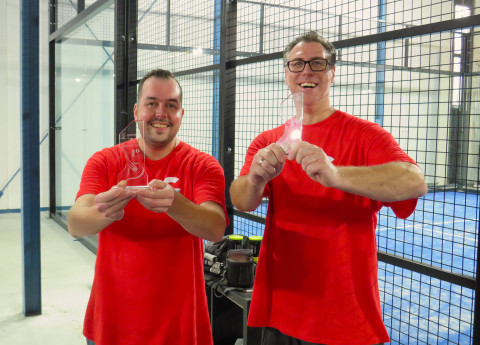
Anyone who knows Gateway is familiar with the legendary "Gateway Game Evening". But we do a lot more together these days! Last month we had our most sporting event of the year, the Gateway Sports Day! A day full of sports, fun, competition and team building.

As of October 1, 2023, the European Union has taken a significant step in its battle against climate change with the introduction of the Carbon Border Adjustment Mechanism (CBAM). This mechanism represents a substantial shift in EU trade policy, aimed at addressing the CO2 emissions associated with the production of certain imported goods. In this article, we explore the core principles of CBAM, its impact on importers and customs declarants, and the future developments businesses should anticipate.

At Gateway, we place great emphasis on cultural traditions and strengthening ties with our international partners. The Mid-Autumn Festival, which falls on 29 September this year according to the lunar calendar, is one such occasion. This prominent Chinese festival brings families and friends together to admire the full moon and indulge in unique delicacies. It symbolises a time of unity and gratitude towards loved ones.

The deadline for NCTS Phase 5 on 1st December, 2023, will not be met by several EU member states, including the Netherlands. Therefore, Dutch Customs has decided to postpone the release of the New Computerised Transit System (NCTS). In May 2024, Dutch Customs announced that all companies will switch to the new Customs Transit Application (NCTS Phase 5) on October 29. From that date, companies will only be able to submit transit declarations via DVA.

Navigating the complex world of EU excise goods transport? If you've been relying on the Excise Movement Control System (EMCS), prepare for transformative changes. As of 14 July 2023, the Horizontal Excise Directive (EMCS) enters its next phase. If your operations still hinge on older platforms or emergency procedures, this is a golden opportunity to pivot to cutting-edge customs software solutions, such as Gateway, designed for streamlined electronic declarations and efficient excise goods transport.

Exporting goods beyond the EU boundaries? For businesses involved in the export industry or those advocating for EU exporters, it's paramount to stay updated about the pivotal shift from the ECS system to the AES platform, scheduled between 8th May and 30th September 2023.

As experts in delivering secure, efficient, and reliable global logistic services, Baosen Suntop Europe sought future-proof customs software. Their objective was to automate all operations, from generating customs declarations to fiscal representation and dispatching invoices with all necessary attachments. We were ultimately selected as their partner, and we couldn't be prouder.

On May 11, we organized another knowledge session, this time focusing on DMS 4.0. After a brief introduction, our CEO, Steven Veelders, delivered a presentation on why AGS is not sufficient for the EUCDM (European Customs Data Model) and how DMS 4.0 has been implemented.

During the past 7 years, one of our reports has been played no less than 700,000,000 times. And that's only with 1 of our customers. This impressive achievement is a reflection of the partnership we have with our customers and a testament to the stability, efficiency, reliability and quality our company has to offer.

On March 21, the DMS 4.1 & EIDR information session took place at our office in Capelle aan den IJssel. Leo Alewijnse and Paul Albers of Dutch Customs gave an extensive explanation of the new working methods and were able to answer all kinds of questions from the audience. Very educational and definitely worth repeating! Thanks, gentlemen!
Do you transport excise goods and do you use EMCS (Excise Movement and Control System)? Are you familiar with the changes and have you already applied for / received the new customs permits? We are ready to offer you a smooth and hassle-free transition to the new EMCS 4.0.

Gateway is a leading customs software developer since 1980. In 2020, we launched GWITC© (Gateway in the Cloud). In 2022, Gateway started cooperation with Microsoft Azure. Many of clients work now on Azure and benefit from its dynamic strengths.

Hooray! Theo works 20 years now at Gateway! This is definitely a great milestone to celebrate and cherish the great cooperation, hard work, and many beautiful moments we have shared together.

The Dutch Customs has made a new planning for the transition to the new systems of DMS 4.0 and DMS 4.1. The old planning was previously postponed due to some IT connection issues, which luckily have already been solved.

Due to the growth of the Gateway team, it’s necessary for us to move into a larger office. Luckily, we have found a beautiful office very close to our current one.

Christmas Lunch is really a must-do at Gateway. It’s been our long-hold tradition to host Christmas Lunch for our beloved colleagues.

On 19 November 2022, the Customs has published a new version of Tariff/DTV (in Dutch: Douane Tarief Voorziening). There are several adjusted document codes that exporters should use in customs declarations for preferential origin purposes.

On 1 January 2023, the EU commodity codes in the Harmonized System (HS) will be adjusted. This can have large impacts on your import and export customs declarations, and the determination of your VAT tariff for your international products.

Do you handle e-commerce packages sold from outside the EU? Do you want to be entitled to the exemption of customs duties? Gateway offers an all-in-one solution for your e-commerce customs activities, which can largely simplify, automate, and accelerate your whole e-commerce logistic process.

Do you deal with a Bonded Warehouse (in Dutch "Douane Entrepot")? Do you make use of GPA (Automated Periodic Declaration), DIN/DEN, or any other IIAA / EIDR (Entry in the Declarant’s Records) permit? Then Gateway has a perfect all-in software solution for managing your bonded warehouse and all IIAA administrations.

Gateway is now 42 years old! While we couldn't celebrate our 40th anniversary due to Corona, we went to Berlin in 2022 for a big celebration.

The PGTS function in Gateway enables users to send the necessary messages to Cargonaut's PGTS system for registration in the RTO (Temporary Storage).
A lot is happening in the development of DMS 4.0 and the end of the project is near. In order to inform and prepare our customers as well as possible, we have organized an additional information session about DMS 4.0. Below is a brief summary of the topics discussed.

Autumn is the time of the Asian festival in honor of the new harvest. The Mid-Autumn Festival! This is a traditional festival with a history dating back 3000 years! It is held on the 15th day of the 8th month of the “lunar calendar”.
Customs has called on all IIAA license holders to make a choice regarding the scenario that applies to them.

Apart from the fact that we are experts in the field of Customs Software, our colleagues are also experts in the field of Gaming! And I have to say that occasionally makes you laugh…
To date, mismatches have regularly taken place between the Declaration for Temporary Storage (ATO) and the further AGS declaration, and many items on the ATO remain untreated. If an AGS declaration is not accepted, the cargo may not leave the terminal and you can imagine what kind of delay this will cause in the logistics process. Let alone the fines that may be handed out.

Today we were able to deliver our DECO application to our customer. Experience the look and feel before they can really get started, because from 1 July 2021 the time has come, then B2C e-commerce shipments can be declared via the new DECO system of Customs.
© 2024 Gateway